The Airplane You Inflate Like a Pool Toy
Goodyear’s Inflatoplane was a real rubber airplane that packed into a box, puffed up in about five minutes, and flew on a tiny engine — less air pressure than a car tire.
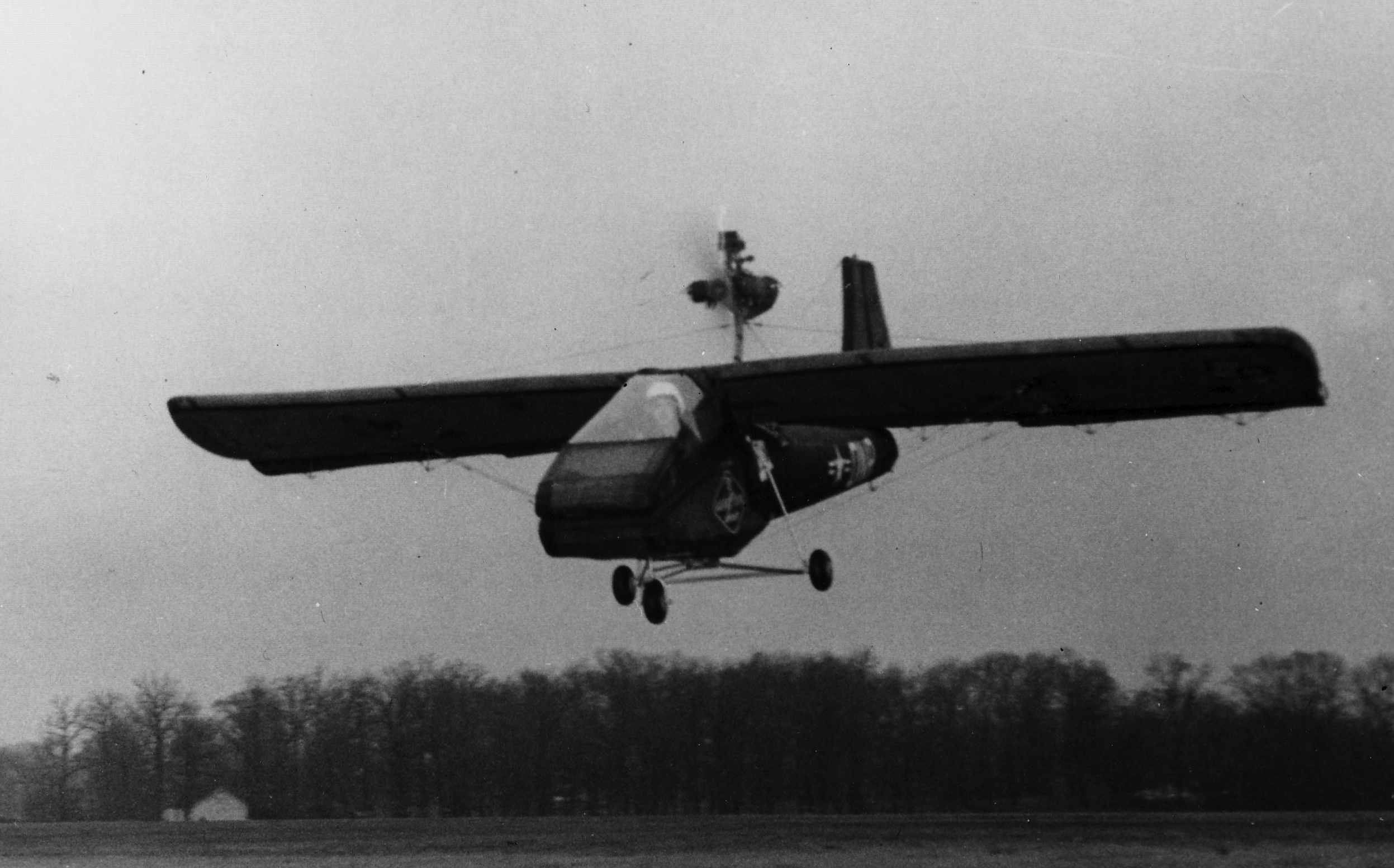
Blow it up, then fly
Most airplanes are metal tubes with wings. Goodyear’s Inflatoplane was closer to a clever pool toy that somehow earned a pilot’s seat.
In 1956 the Goodyear Aircraft Company built an all-fabric plane that started life folded into a hardened container about the size of a big trunk — roughly 44 cubic feet. Open the box, connect the air, wait about five minutes, and you had wings, a fuselage, and a place to sit. The single-seat GA-468 stretched about 19 feet 7 inches long with a 22-foot wingspan. A small two-stroke Nelson engine — about 40 to 42 horsepower — sat on top of the wing. Hand-start it. Roll out. Fly.
Cruise sat near 60 mph. Top speed was around 72. On a tank of about 20 gallons it could stay up for hours and cover hundreds of miles. Smithsonian notes put performance in the same neighborhood as a Piper J-3 Cub: short takeoffs from sod, gentle climbs, service ceiling near 10,000 feet. It was not a jet. It was a proof that air itself can be structure.
Why rubber wings stay stiff
The trick was not “more balloon.” Goodyear used Airmat — two rubberized fabric skins joined by a forest of nylon threads, like a fabric I-beam. Inflate it and the threads hold a wing shape. An engine-driven compressor kept low pressure circulating in flight so a puncture did not instantly turn the plane into a flat tire. Testers even talked about Airmat surviving several small bullet holes and still holding shape. Less pressure than a car tire. More discipline than a beach ball.
The idea on paper was rescue and remote travel: drop or truck the packed plane to a pilot who needed a way out, inflate, and leave. Later versions tried two seats and gear that could handle land, water, or snow without swapping parts. About a dozen Inflatoplanes were built. Testing and evaluation ran for years. The program ended in 1973. No airline ever boarded passengers on rubber wings.
What the hangar keeps
Captain, ten, wrote “air is the spar” on the board so nobody calls it “just a balloon.” Co-Pilot, eight, wants to know if you can pack one under a bed. Wingman, six, named it the puff plane, which is unfair to the nylon but perfect for the photo.
Survivors live in museum collections — including a GA-468 with the Smithsonian National Air and Space Museum, and others at places like the Stonehenge Air Museum in Montana. You can stare at fabric where most airplanes show rivets and still believe the flight logs. Weird engineering is still engineering when the numbers work.
The hangar lesson is soft on glory and hard on materials. Shape, pressure, and continuous air supply turned fabric into a flying structure. That is closer to a careful science fair than to a cartoon.
Try this: pressure makes the spar
Blow up a long balloon. Hold it by the ends like a wing. It bends. Now tape two balloons side by side with a strip of cardboard between them, or slide a drinking straw “spar” through a paper sleeve and inflate a balloon on each side of the straw. The sandwich feels stiffer. That is a backyard whisper of Airmat — skins plus something that keeps the distance.
Do not sit on pool toys and call them airplanes. Real Inflatoplanes had engines, compressors, and test pilots. Yours stays on the rug.
Source note
Goodyear Inflatoplane (GA-447 / GA-468 and related); first built 1956; Airmat rubberized nylon structure; ~5-minute inflate; GA-468 ~19 ft 7 in long, 22 ft span; ~40–42 hp Nelson two-stroke; cruise ~60 mph; program cancelled 1973; examples preserved (incl. Smithsonian NASM GA-468).
Crew note
Captain refuses the word “balloon” without the Airmat correction. Co-Pilot keeps asking if bike-pump pressure counts. Wingman wants a paper Inflatoplane that folds into a cereal box, which is the whole assignment minus the engine.